
For homeowners with solar panels, a second-life EV battery can replace a pricey new Tesla Powerwall. These systems keep the lights on during outages and reduce reliance on the grid. In remote cabins or tiny homes, they’re a game-changer. Sure, they’re heavier and bulkier than new units — but they cost a fraction of the price.
3. Commercial and Industrial Peak Shaving
Factories and data centers pay hefty fees for high electricity demand. A bank of second-life batteries can kick in during peak hours, smoothing out that demand curve. It’s like putting a shock absorber on your power bill.
4. EV Charging Buffers
Fast-charging stations can overwhelm local grids. Repurposed batteries act as a buffer — sipping power slowly from the grid and then delivering it quickly to cars. This reduces infrastructure upgrades and keeps charging speeds high.
5. Low-Power Applications (The Unsung Heroes)
Streetlights, traffic signals, remote sensors, cell towers… these don’t need much power, but they need it consistently. Second-life batteries shine here, especially where running new power lines is expensive or impossible.
The Technical Hurdles Nobody Talks About
Look, repurposing isn’t as simple as yanking a battery from a wrecked Leaf and plugging it into your basement. There are real challenges.
- Battery heterogeneity: Every pack degrades differently. Two batteries from the same model year might have wildly different health. That makes standardization a nightmare.
- Safety concerns: Old lithium-ion cells can still catch fire if mishandled. Second-life systems need robust battery management systems (BMS) to monitor voltage, temperature, and state of health.
- Logistics: EV batteries are heavy — often 1,000 pounds or more. Transporting them safely and legally costs money and paperwork.
- Lack of standards: There’s no universal grading system for used EV batteries. One man’s “Grade A” is another’s “meh.”
That said, these hurdles are being tackled. Companies like Nissan, BMW, and startups like B2U Storage Solutions are developing testing protocols and modular designs that make repurposing easier.
How Repurposing Fits Into the Circular Economy
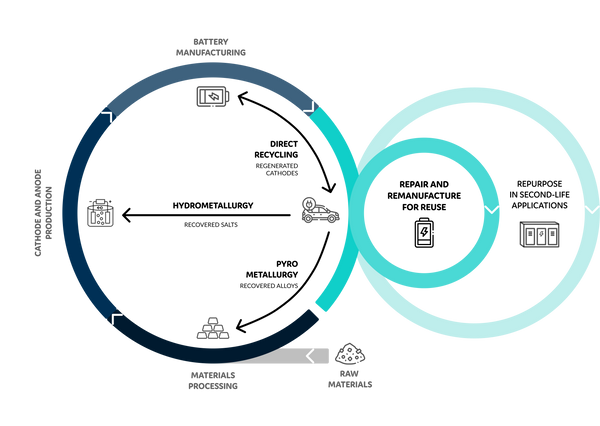
Here’s a number that sticks with you: by 2030, the world could have over 1.5 million retired EV battery packs. That’s a mountain of potential. If we recycle them all immediately, we waste years of remaining useful life. If we repurpose them first, we delay recycling by 5–10 years — and reduce the demand for new mining in the process.
It’s the circular economy in action. Use, reuse, then recycle. Not use, toss, dig more holes.
| Stage | What Happens | Typical Duration |
|---|---|---|
| First life (vehicle) | Powers an EV for daily driving | 8–12 years |
| Second life (repurposed) | Stationary storage, backup, grid support | 5–10 years |
| Recycling | Metals recovered for new batteries | End of lifecycle |
What’s Holding Us Back?
Honestly? Economics and inertia. New batteries keep getting cheaper, which narrows the price gap between new and second-life. Automakers are also wary of warranty and liability issues. If a repurposed battery fails, who’s responsible?
And then there’s the “ick” factor. Some consumers hear “used battery” and think “unreliable.” But that’s changing as more success stories emerge. A repurposed battery that’s been tested and certified can be just as dependable as a new one — often for half the cost.
The Road Ahead (And It’s Not Paved with New Batteries)
Policy is starting to catch up. The EU’s new battery regulation requires manufacturers to declare recycled content and consider second-life options. In the U.S., the Inflation Reduction Act nudges things forward with incentives for domestic battery supply chains — including repurposing.
Meanwhile, researchers are exploring “direct recycling” methods that refurbish cathode materials without breaking them down completely. And AI-driven battery health diagnostics are making it faster to sort good packs from bad ones.
We’re not there yet. But the direction is clear. The future of EV batteries isn’t just about driving. It’s about storage, resilience, and squeezing every last electron of value from materials we’ve already pulled from the earth.
So next time you see an old EV sitting in a scrapyard, don’t think “dead.” Think “semi-retired.” Because that battery might just have a second career ahead of it — one that keeps the lights on, the grid stable, and the circular economy humming.
2. Home Backup and Off-Grid Systems
For homeowners with solar panels, a second-life EV battery can replace a pricey new Tesla Powerwall. These systems keep the lights on during outages and reduce reliance on the grid. In remote cabins or tiny homes, they’re a game-changer. Sure, they’re heavier and bulkier than new units — but they cost a fraction of the price.
3. Commercial and Industrial Peak Shaving
Factories and data centers pay hefty fees for high electricity demand. A bank of second-life batteries can kick in during peak hours, smoothing out that demand curve. It’s like putting a shock absorber on your power bill.
4. EV Charging Buffers
Fast-charging stations can overwhelm local grids. Repurposed batteries act as a buffer — sipping power slowly from the grid and then delivering it quickly to cars. This reduces infrastructure upgrades and keeps charging speeds high.
5. Low-Power Applications (The Unsung Heroes)
Streetlights, traffic signals, remote sensors, cell towers… these don’t need much power, but they need it consistently. Second-life batteries shine here, especially where running new power lines is expensive or impossible.
The Technical Hurdles Nobody Talks About
Look, repurposing isn’t as simple as yanking a battery from a wrecked Leaf and plugging it into your basement. There are real challenges.
- Battery heterogeneity: Every pack degrades differently. Two batteries from the same model year might have wildly different health. That makes standardization a nightmare.
- Safety concerns: Old lithium-ion cells can still catch fire if mishandled. Second-life systems need robust battery management systems (BMS) to monitor voltage, temperature, and state of health.
- Logistics: EV batteries are heavy — often 1,000 pounds or more. Transporting them safely and legally costs money and paperwork.
- Lack of standards: There’s no universal grading system for used EV batteries. One man’s “Grade A” is another’s “meh.”
That said, these hurdles are being tackled. Companies like Nissan, BMW, and startups like B2U Storage Solutions are developing testing protocols and modular designs that make repurposing easier.
How Repurposing Fits Into the Circular Economy
Here’s a number that sticks with you: by 2030, the world could have over 1.5 million retired EV battery packs. That’s a mountain of potential. If we recycle them all immediately, we waste years of remaining useful life. If we repurpose them first, we delay recycling by 5–10 years — and reduce the demand for new mining in the process.
It’s the circular economy in action. Use, reuse, then recycle. Not use, toss, dig more holes.
| Stage | What Happens | Typical Duration |
|---|---|---|
| First life (vehicle) | Powers an EV for daily driving | 8–12 years |
| Second life (repurposed) | Stationary storage, backup, grid support | 5–10 years |
| Recycling | Metals recovered for new batteries | End of lifecycle |
What’s Holding Us Back?
Honestly? Economics and inertia. New batteries keep getting cheaper, which narrows the price gap between new and second-life. Automakers are also wary of warranty and liability issues. If a repurposed battery fails, who’s responsible?
And then there’s the “ick” factor. Some consumers hear “used battery” and think “unreliable.” But that’s changing as more success stories emerge. A repurposed battery that’s been tested and certified can be just as dependable as a new one — often for half the cost.
The Road Ahead (And It’s Not Paved with New Batteries)
Policy is starting to catch up. The EU’s new battery regulation requires manufacturers to declare recycled content and consider second-life options. In the U.S., the Inflation Reduction Act nudges things forward with incentives for domestic battery supply chains — including repurposing.
Meanwhile, researchers are exploring “direct recycling” methods that refurbish cathode materials without breaking them down completely. And AI-driven battery health diagnostics are making it faster to sort good packs from bad ones.
We’re not there yet. But the direction is clear. The future of EV batteries isn’t just about driving. It’s about storage, resilience, and squeezing every last electron of value from materials we’ve already pulled from the earth.
So next time you see an old EV sitting in a scrapyard, don’t think “dead.” Think “semi-retired.” Because that battery might just have a second career ahead of it — one that keeps the lights on, the grid stable, and the circular economy humming.
There’s a quiet revolution happening in garages, warehouses, and utility lots around the world. It doesn’t involve shiny new cars or flashy tech launches. Instead, it’s about what happens to electric vehicle batteries after they retire from the road. Honestly, this might be one of the most underrated stories in the whole EV boom.
You see, an EV battery isn’t dead when it stops powering a car. It’s more like a marathon runner who can’t sprint anymore but can still walk for miles. That “walking” phase — the second life — is where things get interesting. And it’s spawning an entire industry around repurposing, reusing, and rethinking what we do with these massive, mineral-rich packs.
Why EV Batteries Retire Early (But Aren’t Really Done)
Here’s the deal: most EV batteries are considered “end of life” for driving when they drop to around 70–80% of their original capacity. That sounds like a lot of degradation, sure. But think about it — a battery that once gave you 300 miles of range might now give you 210. For a driver, that’s annoying. For a stationary energy storage system? That’s perfectly fine.
In fact, many second-life applications don’t need high energy density or rapid discharge. They need endurance, reliability, and cost-effectiveness. And retired EV batteries have all three in spades.
What Exactly Is Battery Repurposing?
Repurposing — sometimes called “second-life” or “cascading” — means taking a battery pack out of a vehicle and giving it a new job. It’s not recycling. Recycling shreds the battery to recover metals like lithium, nickel, and cobalt. Repurposing keeps the battery intact, or at least keeps its modules alive, and reuses them as-is.
That distinction matters. Recycling is energy-intensive and loses the embedded manufacturing value. Repurposing squeezes more life out of that original investment. It’s the difference between melting down a worn-out engine for scrap and using it to power a generator on a farm.
Common Second-Life Applications You’ll Actually See
So where do these retired batteries go? Let’s walk through the big ones.
1. Grid-Scale Energy Storage
Utilities love this one. Wind and solar farms produce electricity when the wind blows or sun shines — not necessarily when people need power. Second-life batteries store that excess energy and release it during peak demand. A single repurposed EV pack might store enough juice to run a few homes for a day. Stack hundreds together, and you’ve got a grid asset.
2. Home Backup and Off-Grid Systems
For homeowners with solar panels, a second-life EV battery can replace a pricey new Tesla Powerwall. These systems keep the lights on during outages and reduce reliance on the grid. In remote cabins or tiny homes, they’re a game-changer. Sure, they’re heavier and bulkier than new units — but they cost a fraction of the price.
3. Commercial and Industrial Peak Shaving
Factories and data centers pay hefty fees for high electricity demand. A bank of second-life batteries can kick in during peak hours, smoothing out that demand curve. It’s like putting a shock absorber on your power bill.
4. EV Charging Buffers
Fast-charging stations can overwhelm local grids. Repurposed batteries act as a buffer — sipping power slowly from the grid and then delivering it quickly to cars. This reduces infrastructure upgrades and keeps charging speeds high.
5. Low-Power Applications (The Unsung Heroes)
Streetlights, traffic signals, remote sensors, cell towers… these don’t need much power, but they need it consistently. Second-life batteries shine here, especially where running new power lines is expensive or impossible.
The Technical Hurdles Nobody Talks About
Look, repurposing isn’t as simple as yanking a battery from a wrecked Leaf and plugging it into your basement. There are real challenges.
- Battery heterogeneity: Every pack degrades differently. Two batteries from the same model year might have wildly different health. That makes standardization a nightmare.
- Safety concerns: Old lithium-ion cells can still catch fire if mishandled. Second-life systems need robust battery management systems (BMS) to monitor voltage, temperature, and state of health.
- Logistics: EV batteries are heavy — often 1,000 pounds or more. Transporting them safely and legally costs money and paperwork.
- Lack of standards: There’s no universal grading system for used EV batteries. One man’s “Grade A” is another’s “meh.”
That said, these hurdles are being tackled. Companies like Nissan, BMW, and startups like B2U Storage Solutions are developing testing protocols and modular designs that make repurposing easier.
How Repurposing Fits Into the Circular Economy
Here’s a number that sticks with you: by 2030, the world could have over 1.5 million retired EV battery packs. That’s a mountain of potential. If we recycle them all immediately, we waste years of remaining useful life. If we repurpose them first, we delay recycling by 5–10 years — and reduce the demand for new mining in the process.
It’s the circular economy in action. Use, reuse, then recycle. Not use, toss, dig more holes.
| Stage | What Happens | Typical Duration |
|---|---|---|
| First life (vehicle) | Powers an EV for daily driving | 8–12 years |
| Second life (repurposed) | Stationary storage, backup, grid support | 5–10 years |
| Recycling | Metals recovered for new batteries | End of lifecycle |
What’s Holding Us Back?
Honestly? Economics and inertia. New batteries keep getting cheaper, which narrows the price gap between new and second-life. Automakers are also wary of warranty and liability issues. If a repurposed battery fails, who’s responsible?
And then there’s the “ick” factor. Some consumers hear “used battery” and think “unreliable.” But that’s changing as more success stories emerge. A repurposed battery that’s been tested and certified can be just as dependable as a new one — often for half the cost.
The Road Ahead (And It’s Not Paved with New Batteries)
Policy is starting to catch up. The EU’s new battery regulation requires manufacturers to declare recycled content and consider second-life options. In the U.S., the Inflation Reduction Act nudges things forward with incentives for domestic battery supply chains — including repurposing.
Meanwhile, researchers are exploring “direct recycling” methods that refurbish cathode materials without breaking them down completely. And AI-driven battery health diagnostics are making it faster to sort good packs from bad ones.
We’re not there yet. But the direction is clear. The future of EV batteries isn’t just about driving. It’s about storage, resilience, and squeezing every last electron of value from materials we’ve already pulled from the earth.
So next time you see an old EV sitting in a scrapyard, don’t think “dead.” Think “semi-retired.” Because that battery might just have a second career ahead of it — one that keeps the lights on, the grid stable, and the circular economy humming.