
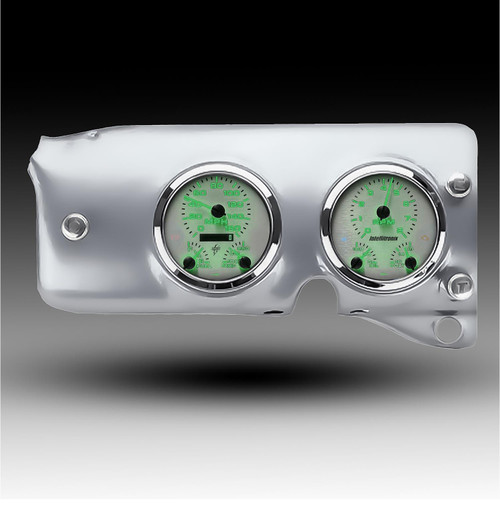
There’s something magical about sliding into a classic car. The smell of old leather, the heavy thud of a steel door—honestly, it’s a time machine. But then you glance at the dashboard. Those tiny, yellowed gauges with their flickering needles… they’re charming, sure. But they’re also lying to you. Half the time, the fuel gauge reads “E” when you’ve got a quarter tank. The speedometer jumps like a startled cat. And the oil pressure? Who knows.
Here’s the deal: you don’t have to sacrifice that vintage soul to get modern accuracy. Aftermarket digital gauge clusters for classic cars are the sweet spot. They blend retro aesthetics with 21st-century brains. And in 2025, the options are better than ever.
Why Swap Out Your Old Gauges?
Let’s be real—original gauges weren’t built for today’s driving. They were designed for a time when cars had carburetors and points ignitions. If you’ve upgraded your classic with a modern engine, EFI, or even a mild restomod, those old needles can’t keep up. They’re not just inaccurate; they’re dangerous.
Think about it. You’re cruising at 70 mph on the highway. Your speedometer says 55. That’s a ticket waiting to happen. Or worse—your oil pressure drops, but the gauge doesn’t flinch until the engine seizes. Yeah, no thanks.
Digital clusters solve this. They use sensors that actually talk to your car’s brain (or your aftermarket ECU). They give you real-time data. And honestly, they look incredible.
The Pain Points: What You’re Really Tired Of
- Inaccuracy: Needles that drift, stick, or just give up.
- Poor visibility: At night, those old bulbs are dimmer than a candle.
- Limited data: No coolant temp, no voltage, no fuel economy—just guesses.
- Vibration damage: Old mechanical gauges shake themselves to death.
Honestly, it’s a pain point that every classic owner knows. But here’s the good news: the fix is easier than you think.
What Makes a Good Aftermarket Digital Cluster?
Not all digital clusters are created equal. Some look like a spaceship threw up on your dashboard. Others try too hard to be retro and end up looking cheap. The sweet spot? A cluster that respects the car’s original design while upgrading the guts.
You want a few key features. First, customizable display layouts. Maybe you want a classic round speedo on the left, digital readouts on the right. Maybe you want a full TFT screen that shows everything at once. Your call.
Second, plug-and-play compatibility. Nobody wants to rewire their entire harness. Look for clusters that work with your car’s existing sending units—or at least come with clear instructions.
Third, durability. These things live in a hot, vibrating dashboard. Cheap screens will delaminate or fade. Invest in something with an automotive-grade display.
Popular Brands You Should Know
| Brand | Best For | Price Range |
|---|---|---|
| Dakota Digital | Classic muscle cars & trucks | $400–$900 |
| Classic Instruments | Vintage looks, modern internals | $500–$1,200 |
| Speedhut | Fully customizable gauges | $300–$800 |
| Holley EFI | Restomod & LS swaps | $600–$1,500 |
Dakota Digital is probably the most popular. They make clusters that look like they belong in a ’69 Camaro, but with digital brains. Speedhut lets you design everything—colors, fonts, even the logo. And Holley? Well, if you’re running a modern engine, their digital dash is basically a command center.
Installation: Easier Than You Think (But Not Trivial)
Let’s be honest—some people are terrified of wiring. I get it. But most aftermarket clusters are designed for DIYers. You’re not building a rocket. You’re connecting a few wires: power, ground, speed sensor, maybe a CAN bus line.
That said, there’s a catch. If your car still has a mechanical speedometer cable (like most pre-1980s cars), you’ll need an electronic speed sensor. That usually means installing a small sender on the transmission. It’s not hard, but it’s an extra step.
Another thing: the cluster housing. Some kits come with a new bezel that fits perfectly. Others require you to modify your original dash. Measure twice, cut once. Or just buy a pre-cut housing if you’re not confident.
Here’s a quick checklist for installation:
- Disconnect the battery. Seriously. Don’t skip this.
- Remove the old cluster. Usually a few screws and a wiring connector.
- Mount the new cluster. Use the provided brackets or modify carefully.
- Connect the wiring harness. Most are color-coded. Follow the manual.
- Calibrate the speedometer. Usually involves driving a measured mile.
- Test everything. Then take it for a spin.
Honestly, if you’ve ever changed a radio, you can do this. It might take an afternoon, but the result is worth it.
Digital vs. Analog: The Great Debate
I know what some purists are thinking: “Digital gauges ruin the character.” And sure, I get that. A ’65 Mustang with a glowing LCD screen feels… off, somehow. But here’s the thing—you can have both.
Many aftermarket clusters let you choose an analog-style display. Needles that sweep across the screen, but with digital precision. It’s the best of both worlds. You get the look you love, without the flaky innards.
And let’s not forget night driving. Digital clusters are adjustable. Dim them down for a relaxed cruise, or crank them up for visibility. No more squinting at a faint glow.
What About Resale Value?
This is a real concern. Will a digital cluster hurt your car’s value? It depends. For a numbers-matching, concours-level restoration? Yeah, keep the original gauges in a box. But for a driver—a car you actually enjoy—an upgrade can increase value. Buyers love functionality. They love not guessing their fuel level.
Just keep the old parts. Future owners can always swap back.
Current Trends in 2025
Right now, the biggest trend is wireless connectivity. Some clusters can pair with your phone. You get GPS speed, lap times, even engine diagnostics on a tiny screen. It’s like having a modern car’s infotainment system, but hidden in your classic dash.
Another trend? Retro-futurism. Think Tron meets a 1970s Trans Am. Glowing blue lines, pixelated fonts, but housed in an original bezel. It’s bold, but for the right car, it’s stunning.
And of course, plug-and-play kits are getting better. Companies like Dakota Digital now offer clusters that work with your stock sending units. No extra sensors. No cutting. Just plug it in and go.
Final Thoughts (Before You Decide)
Look, I’m not saying you have to rip out your old gauges. There’s beauty in originality. But if you actually drive your classic—if you take it on road trips, to car shows, or just to the grocery store—you deserve to know what’s happening under the hood.
An aftermarket digital gauge cluster isn’t about showing off. It’s about peace of mind. It’s about seeing your oil pressure rise as the engine warms up, knowing you’re not about to blow a head gasket. It’s about reading your fuel level without tapping the tank.
So take a look at your dashboard. Imagine it with crisp, bright numbers. Imagine never guessing again. That’s the upgrade. And honestly? Your classic deserves it.
Now go drive it.