
Imagine this: you pull into your driveway after work, plug in your electric car, and instead of just sucking up expensive electricity, it starts earning you money. Sounds like a fantasy, right? Well, welcome to the not-so-distant world of Vehicle-to-Grid (V2G) technology. It’s a concept that’s poised to turn our garages into mini power stations and completely reshape our relationship with energy.
Let’s dive in. This guide will break down what V2G is, how it works for a regular homeowner, and what you need to know to get ready. No engineering degree required.
What is V2G, Really? The Simple Analogy
Think of your EV battery as a giant, high-tech water barrel. Normally, with one-way charging (V1G), you just fill the barrel from the hose (the grid). V2G adds a smart spigot. When the grid is thirsty—say, on a scorching hot afternoon when everyone’s blasting AC—you can let some water flow back from your barrel to help out. You get paid for the water, and the grid stays stable. Everyone wins.
Technically, it’s a bidirectional charging system. It doesn’t just charge your car; it lets your car discharge energy back to your home or, through a certified program, directly to the utility grid. Your EV becomes a rolling battery storage unit.
Why Would a Homeowner Even Bother? The Real Benefits
Sure, it sounds cool, but what’s in it for you? Honestly, the potential is huge, moving beyond just “fuel” savings.
1. Earning Cash and Cutting Bills
This is the big one. Utilities and aggregators will pay you for the energy services your car provides. You can sell power back during peak demand hours when electricity prices are sky-high. Then, you recharge your car overnight when rates are cheap. This arbitrage—buying low, selling high—can significantly offset your electricity bill. Some early pilots have shown participants earning hundreds per year.
2. A Rock-Solid Backup Power Source
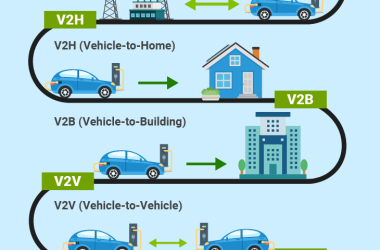
With the right setup (often called V2H, or Vehicle-to-Home), your EV can power your house during an outage. A typical EV has a 60-100 kWh battery. That’s enough to run essential circuits—lights, fridge, a few outlets—for several days. It’s a cleaner, quieter, and often more capable alternative to a gas generator. No more frantic trips for fuel.
3. Supporting a Greener Grid
By feeding stored renewable energy (from your solar panels, perhaps) back to the grid when the sun isn’t shining, you’re helping to integrate more wind and solar power. You become an active participant in decarbonization, which feels pretty good, you know?
The Nuts, Bolts, and… Hurdles. What You Actually Need
Okay, so it’s not quite as simple as buying a special power cord. Here’s the deal on the hardware and the hiccups.
Essential Hardware Checklist
| Component | What It Does | What to Know |
| V2G-Compatible EV | The vehicle itself must support bidirectional charging. | Options are growing (Nissan Leaf, some Ford F-150 Lightnings, upcoming models). Check specs carefully. |
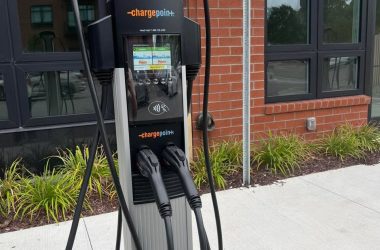
| Bidirectional Charger | The brain and gateway. Manages energy flow to and from the car. | This is a specialized, often costly, piece of equipment. It’s not your standard Level 2 charger. |
| Home Integration System | Often includes a critical loads panel and software to manage power flow safely. | For V2H backup power, this is mandatory. A qualified electrician is non-negotiable. |
| Utility Program & Agreement | Your formal contract to sell energy back to the grid. | Availability is extremely location-dependent. You can’t just start pushing power back. |
The Not-So-Glamorous Challenges
Let’s be real. The path isn’t totally smooth yet.
- Cost: The upfront investment for a bidirectional charger and installation can be steep, often several thousand dollars. The payoff period depends on your utility rates and participation payments.
- Battery Wear and Tear: This is the big question on every EV owner’s mind. Extra charge cycles could accelerate degradation. That said, smart V2G software is designed to optimize battery health—only using a portion of the capacity and avoiding stressful states. The data so far is promising, but long-term studies are ongoing.
- Availability: It’s a patchwork. Compatible cars are limited. Utility programs are rare, often just pilot projects. The tech is still emerging from its early adopter phase.
Getting Started: A Practical Roadmap for Homeowners
Feeling intrigued but overwhelmed? Here’s a step-by-step way to think about it.
- Check Your Utility. This is step zero. Search for “[Your Utility Name] vehicle-to-grid program” or “EV managed charging.” If they have a pilot, see if you qualify. No program? Your V2G-to-grid options are basically zero for now.
- Consider Your Driving Needs. If you drive 100 miles a day, using your battery for the grid might not make sense. But if you have a predictable, shorter commute, your car sits with a full battery most of the time—that’s untapped potential.
- Look at Vehicle-to-Home (V2H) First. For many, the backup power benefit is the most immediate and tangible. When shopping for your next EV or an EV-ready home system, ask about V2H capabilities. It’s a more controlled entry point.
- Talk to Installers. Find an electrification specialist or a certified electrician with EV and battery storage experience. They can give you real-world costs and feasibility for your specific home electrical panel.
- Run the Numbers. Crunch the math based on your current electricity bill (look at time-of-use rates if you have them), any potential participation payments, and the hardware cost. The financial case is still building for most.
The Bigger Picture: What This All Means
V2G isn’t just a neat trick. It’s part of a massive shift. Our grids are getting smarter and more renewable, but they need flexibility—which is exactly what millions of EV batteries can provide. We’re moving from being passive consumers to “prosumers”: producing, storing, and managing energy.
That said, the technology isn’t for everyone today. The ecosystem—cars, chargers, utility programs—needs to mature and become more affordable. But if you’re planning a home solar system, thinking about backup power, or just love being on the cutting edge of energy tech, it’s absolutely worth watching closely.
In the end, V2G asks us to see our cars differently. Not just as transportation, but as a dynamic asset, a community resource, and a key piece in the puzzle of a resilient, clean energy future. The question isn’t really if this will become mainstream, but when. And for the forward-thinking homeowner, getting informed now is the first, most powerful charge.