
You know the feeling. You pull into your driveway after a long day, and you’re greeted by a dark house. You fumble for keys, turn on lights, adjust the thermostat—it’s a whole routine before you can even kick off your shoes. But what if your car could handle all that? What if, as you turned onto your street, your house simply… woke up?
That’s the promise of integrating smart home devices with vehicle automation. It’s not just about a fancy car or a voice-controlled light bulb. It’s about creating a seamless, responsive environment that moves with you. Honestly, it feels less like technology and more like a gentle, helpful presence. Let’s dive into how this connection works, why it’s suddenly becoming a thing, and what it might mean for your daily grind.
Beyond the Garage Door: The Mechanics of Connection
So, how do these two separate worlds—your home and your vehicle—actually communicate? Well, it’s all about bridges. Typically, it happens through the cloud. Your car’s infotainment system, often via a built-in app or a platform like Amazon Alexa or Google Assistant built into the vehicle, sends a signal. That signal pings a server, which then tells your smart home hub to execute a command.
Think of it like a relay race. Your car is the first runner, the cellular network is the track, the cloud server is the handoff point, and your smart home hub is the anchor bringing it home. The key enablers here are geofencing and voice commands. Geofencing sets up an invisible boundary around your home. Cross it, and triggers fire.
Everyday Magic: Real-World Use Cases
This isn’t just theoretical. The integration is solving real, tiny annoyances. Here’s what’s possible right now:
- The Welcome Home Sequence: Your car’s GPS detects you’re 5 minutes away. It triggers your smart home to turn on the porch light, unlock the front door, adjust the thermostat to your preferred “home” temperature, and maybe even start playing your favorite playlist on the kitchen speaker. You arrive to a welcoming, ready space.
- The Departure Routine: You shift into drive to leave for work. Your house gets the hint. It locks all doors, closes the garage door, turns off all interior lights, and sets the security system to “Away.” No more driving back to check if you remembered.
- In-Vehicle Control: Running late? Use your car’s voice assistant or touchscreen to start the robot vacuum, preheat the oven for dinner, or check if you left the back patio light on. It’s like having a remote control for your life, from the driver’s seat.
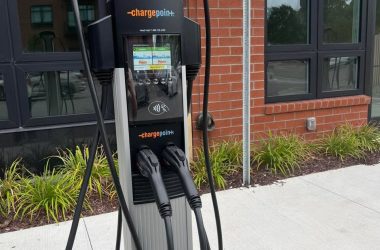
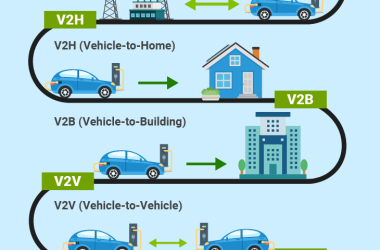
- EV & Home Energy Synergy: For electric vehicle owners, this is huge. You can plug in your car and have it charge automatically during off-peak hours when electricity rates are lowest, coordinated by your home energy manager. Some systems can even use your EV battery as a backup power source for the house during an outage.
The Not-So-Smart Hurdles: Challenges in the Ecosystem
Okay, it’s not all smooth driving yet. The biggest headache? Fragmentation. We’ve got Apple HomeKit, Google Home, Amazon Alexa, Samsung SmartThings, and a dozen car-specific platforms. Not all cars talk to all homes. It’s a bit like a party where everyone speaks a different language—you need a really good translator (or multiple hubs).
Security is another, well, elephant in the room. Connecting more devices creates more potential entry points. If your car app can unlock your front door, that’s a serious access point that needs ironclad protection. And then there’s reliability. A dropped signal or a server hiccup can mean you’re sitting in your driveway waiting for a garage door that won’t open. That said, the industry is painfully aware of these pain points and is scrambling to fix them.
| Current Challenge | What It Means for You | The Trend Fixing It |
| Platform Fragmentation | You might need multiple apps; some devices won’t work together. | Matter protocol adoption (a new universal smart home standard). |
| Data Privacy & Security | Concerns over who accesses your location and home access data. | Biometric authentication in cars, end-to-end encryption. |
| Network Dependency | Commands fail if Wi-Fi or cellular service is spotty. | More edge computing (local processing) in hubs and vehicles. |
The Road Ahead: Where This Convergence is Driving Us
Looking forward, the integration is moving from simple triggers to predictive intelligence. Your systems will learn. They’ll notice you go to the gym every Tuesday after work and, based on traffic, pre-cool the house for your return at just the right time. Your car will know when you’re low on fuel or charge and, with your permission, add a stop to your navigation and pre-pay at the pump—while your house pauses the dryer to manage the energy load.
The vehicle itself becomes less of a standalone product and more of a mobile node in your personal network. Imagine your car’s cameras confirming a delivery at your door, or its microphone (with explicit consent, of course) detecting your smoke alarm while you’re away and alerting you immediately. The boundaries of “home” and “vehicle” will genuinely blur.
Getting Started: A Realistic First Step
Feeling intrigued but overwhelmed? Start small. Pick one thing. If you have a compatible car and a smart garage door opener, set up a geofence for automatic opening and closing. That single, hands-free action is a gateway. It proves the value without a huge setup. From there, maybe add a smart lock or a lighting routine.
The goal isn’t to automate everything for the sake of it. The goal is to eliminate the little friction points—the searching for keys, the wondering, the adjusting—that drain your mental energy. It’s about creating a flow that feels less like managing devices and more like living in a space that’s quietly, thoughtfully attentive.
In the end, the most profound technology is the kind that fades into the background. Integrating your smart home with your vehicle isn’t about showing off. It’s about crafting a subtle rhythm between the places you inhabit, so you can focus a bit more on the road ahead, and a bit less on the light you might have left on.